

Inside Allies: From ranks to recruiting (part one)
When you’ve led teams, carried responsibilities most civilians never encounter, and operated in high-stakes environments, it can be jarring to face a blank resume or job application. You know you bring proven leadership, resilience, and critical thinking skills, but translating your military experience into civilian terms is a mission of its own. And walking into your first non-service interview can feel like stepping onto an entirely different culture.
Many of our recruiters at AT&T have been exactly where you are. They are Veterans from across the branches who have made the military-to-civilian transition themselves and now sit on the other side of the table, helping other Veterans take the next step. They understand the story behind your resume, the pressure that can come with navigating this shift, and what it takes to communicate your strengths clearly.
Their advice is direct, honest, and rooted in lived experience. They share practical, real-world guidance to help you approach the process with clarity, confidence, and a plan.

Army Staff Sergeant Jeff
One of the most important messages they cannot stress enough: don’t wait.
“Start the transition process well before your date of separation,” says Jeff, a former U.S. Army Staff Sergeant and now an Associate Director of Talent Acquisition. “Network, network, network.”
Thomas, a Senior Talent Acquisition Partner and former U.S. Army Command Sergeant Major, echoes the same point, “Network early and often, way before it’s needed.” Building relationships ahead of time makes it easier to ask for referrals, advice, and introductions as your separation date approaches.
“Early preparation matters,” adds James, a U.S. Army Veteran, and Senior Talent Acquisition leader. “Connect with Veteran advocacy groups. They can help you learn the civilian language.”
For some Veterans, early preparation includes aligning their experience to certifications and credentials. Keith, a U.S. Navy Veteran who works within Quality/M&P/Process notes that while military experience is advanced and incredibly valuable, “civilian lingo is quite different.” When you can connect your skills to recognizable certifications and job titles, you help recruiters, and applicant tracking systems (ATS), quickly understand what you bring to the role.
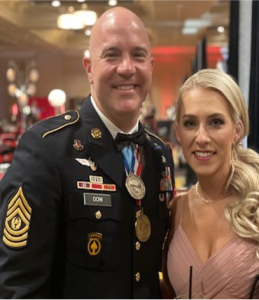
Army Command Sergeant Major Thomas
And that’s where Veterans often get stuck: translation.
Turning your military experience into civilian, recruiter-friendly language isn’t always straightforward. It’s also one of the most frequent questions Veterans search for answers online, “How do I translate my military background into civilian jobs?” It is not that your experience isn’t relevant, it’s that a lot of people simply do not know how to interpret it.
“Translating military skills to the corporate world is often a major challenge for Veterans,” explains JoHanna, a former Marine Corps Corporal and now a Lead Talent Acquisition Manager. “Military roles don’t necessarily have direct civilian equivalents, making it difficult to explain responsibilities and achievements to those unfamiliar with military culture.”
Recruiters see this play out every day, “The resumes that stand out use civilian-friendly language to translate skills and experience in clear terms,” adds James, “They talk dollars, outcomes, and percentages, no military jargon.” For Veterans, instead of listing your MOS, focus on what you accomplished, the number of people you led, what you protected, or what you delivered.
Here’s a simple way to translate. If your title was Platoon Sergeant, you might describe it as Operations Supervisor. Then back it up with plain-language outcomes like, ‘Led a 30 person team, coordinated daily operations across multiple workstreams, and improved on-time completion by X%.
“You also want to fine tune your CV to the role you are applying to instead of papering the walls with one generic resume,” continues Jeff. The “apply everywhere and see what happens” approach doesn’t work. This mind shift lets you focus on targeted roles and companies, understanding what they need and tailoring your resume and outreach accordingly.
JoHanna shares a simple but effective exercise, “Practice describing your military role and experience to someone with no military background at all. If they can understand what you did, you have found a way to effectively communicate your value to civilian employers.” That practice can also help you adjust interview behaviors that may be misread, like limited eye contact or an overly formal demeanor that stems from standing at attention. Then as the saying goes, practice makes perfect.
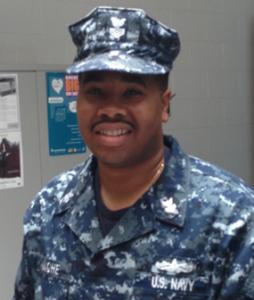
Navy Veteran Keith
Another reality check: rethink leadership.
In the military, career paths are clear, defined by rank, time-in-service, and formal promotion systems. Veterans are often surprised by how different civilian career progression can feel. Promotions in uniform often follow a structured ladder, in the corporate world, that ladder is less defined. Advancement can feel more ambiguous, with paths that zigzag and progress that isn’t always tied to title, tenure, or time in role.
Coast Guard Veteran and Lead Talent Acquisition manager, Sterling said, “The lack of prescribed career ladders and the time-in-service-based knowledge expectations for promotion,” is what surprised him the most when he transitioned. Today, when he works with candidates, he makes a point to explain how advancement typically works within their job family, so expectations are clear from the start.
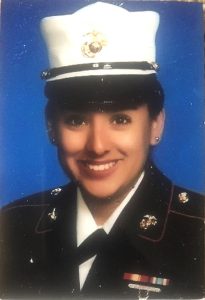
Marine Corps Corporal JoHanna
For transitioning service members, letting go of rank in a new environment can be an emotional adjustment. Thomas is candid about this, “You are no longer your former rank, and that’s okay. You do not have to step into a leadership role on day one. The opportunity to learn and grow in this new space is a good thing. If you are the right person, more opportunities for responsibility will find you.”
Outside of active duty, leadership still matters but can look different. You may influence without formal authority, lead projects instead of command units, and prove your impact through measurable outcomes instead of evaluations through a chain of command. These are strong examples to highlight on your resume and in interviews to show how your leadership translates to business results. That does not diminish what you have done, it simply means you are adding new tools to your leadership toolkit.
Here’s the recap: start now.
If you’re getting ready to separate, or you’ve finished your enlistment and are starting your job search, remember to:
- Give yourself time. If possible, start planning your transition 9–12 months before your end date.
- Use available resources. Take advantage of organizations that offer translation and resume support, mock interviews, and candid feedback.
- Learn the language. Work with Veteran advocacy groups, career coaches, or peers to help translate your experience.
- Align your training. Connect your skills to recognized certification and programs that employers understand.
These steps won’t answer every question, but they will give you a clearer, more confident starting point for your next chapter.
Looking for more advice from our Veteran team members? Find out about perfecting your resume, preparing for an interview, and more in part two of Inside Allies. or…
Learn more about opportunities for Veterans at AT&T
You Might Also Like